|
The Stone in The
Square |
|||
|
The Stone in The
Square is one of the most significant and historic public features in the
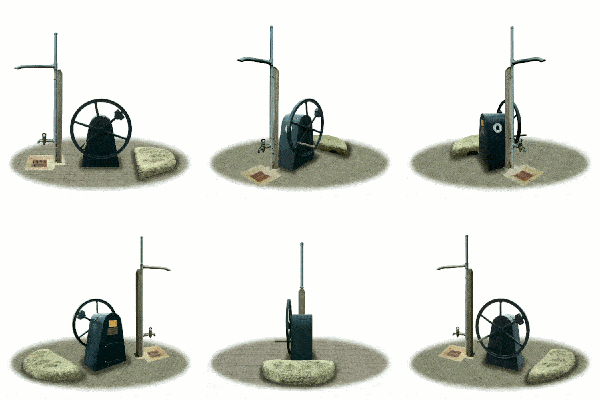
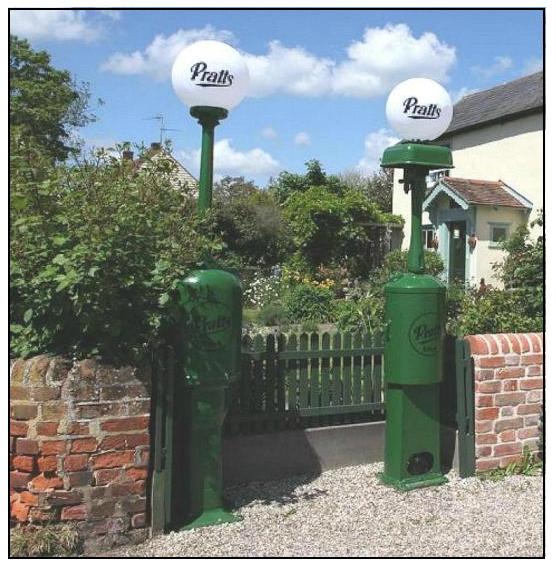
centre of the village, and is as equally important as the village
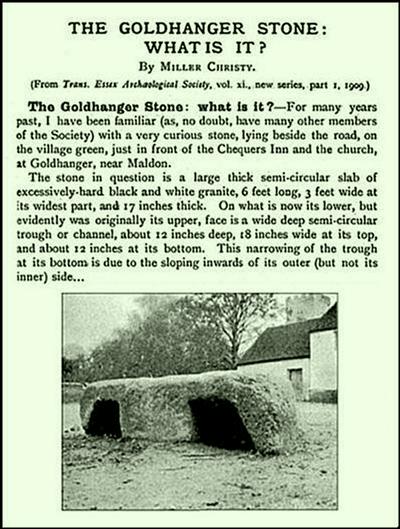
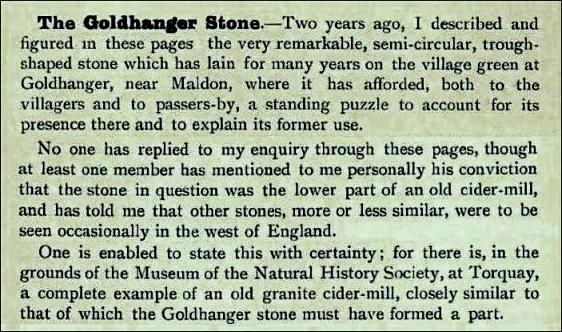
pump, the phone box, bus shelter and the petrol pumps. The well known Essex historian and archaeologist Miller Christy (1861-1928) wrote about the
“Goldhanger stone” on two occasions in the Essex Archaeological Society
journal, firstly in 1909 and then again in 1911... |
|||
|
|
|
||
|
|
|||
|
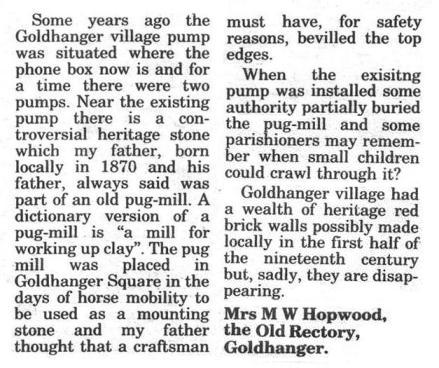
extract from a letter about the
stone that Mrs Hopwood wrote in the 1950s to the M&B describing it as a
“pug-mill” |
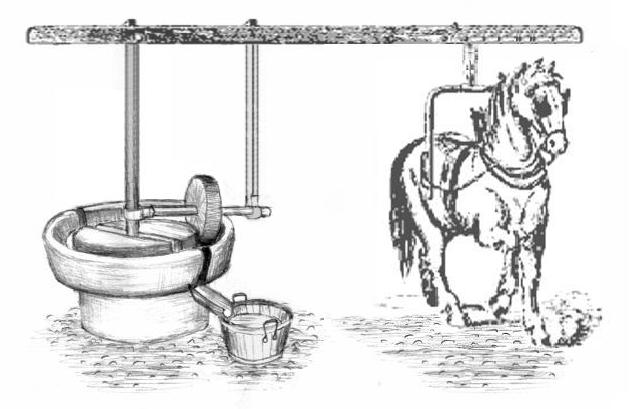
an artist’s impression of a cider
press or
pug-mill in use |
||
|
|
|||
|
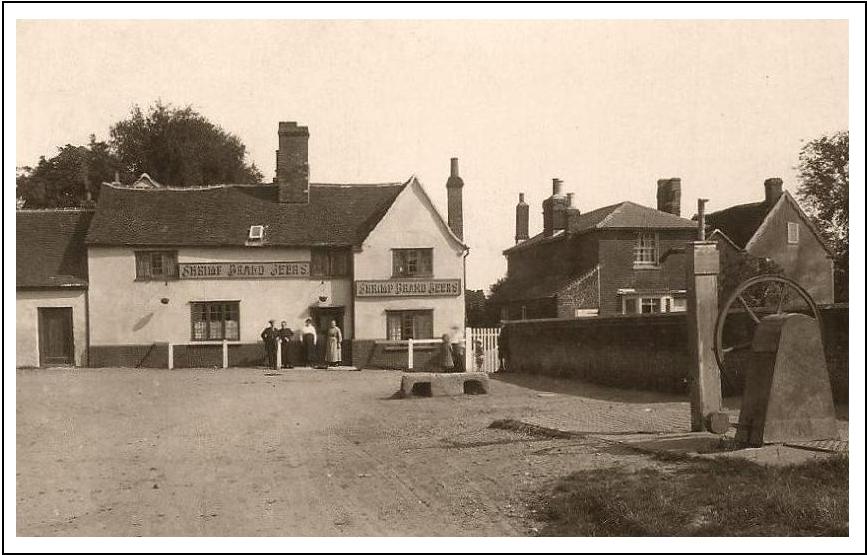
in this
early 1900s postcard the stone is cleary
visible well above ground |
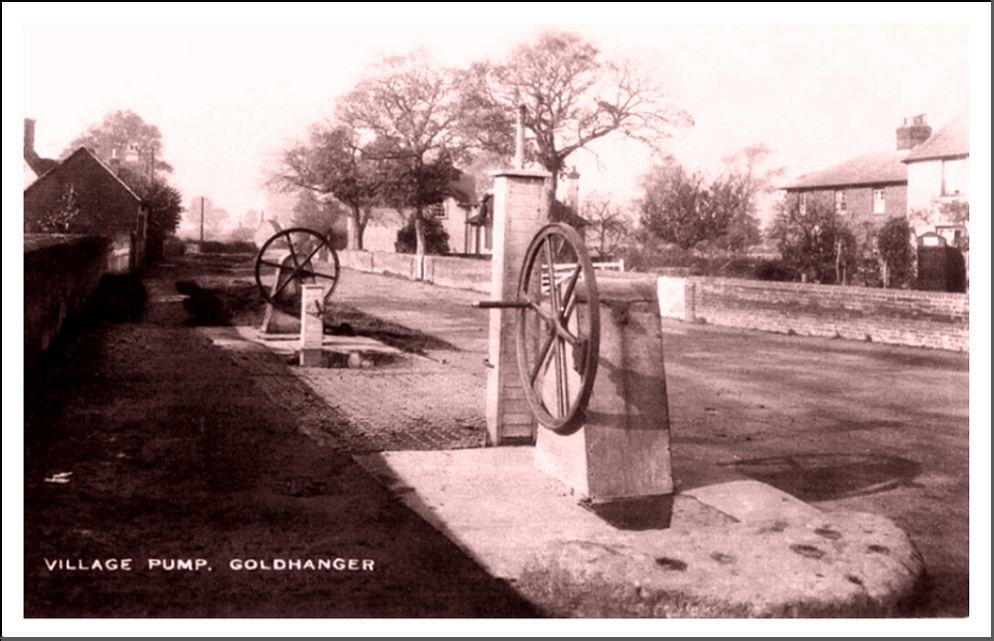
a 1920s postcard showing the stone in the
foreground |
||
|
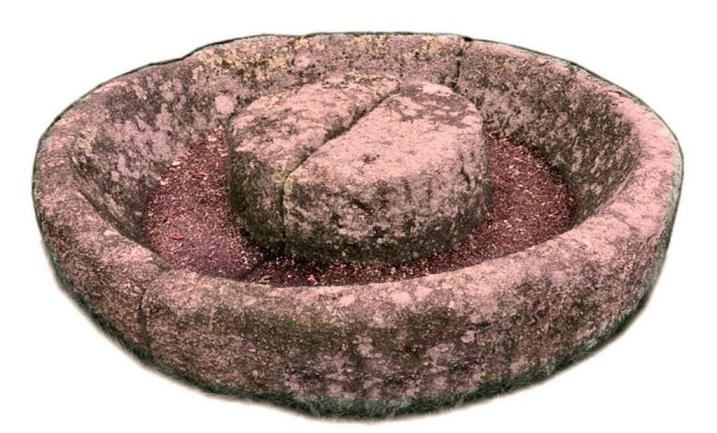
this is a reconstruction of how the
stone would have looked the correct way up when originally made. |
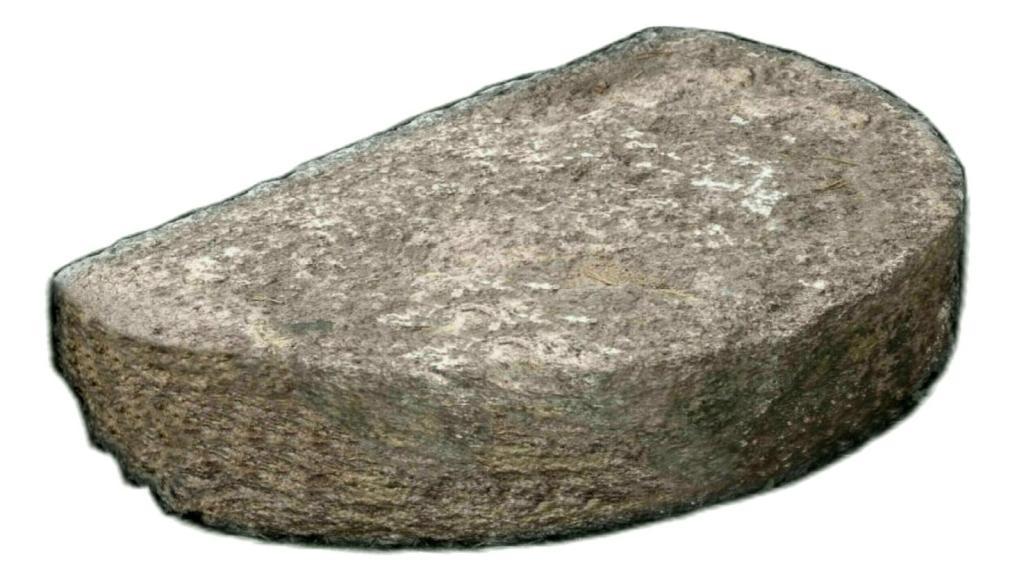
and this is how the broken half
would have looked when inverted. Even with a relatively small break on the
rim it could not have be used for its original purpose but would make a good
door-step. |
||
|
|
|||
|
The unique white flakes visible on the surface have identified the
stone as hard granite unique to Haytor quarry, Dartmoor, Devon, so it would
have come here by sea. We do know however, why it is in its present location - it was
placed there to assist the Chequers guests to mount their horses on their way
home. It is also said to have been used in the past as a scrubbing stone when
washing clothes adjacent to the well. Before the days of a pavement the stone
was free-standing and hence significantly higher as shown in the early
photos, but children became adept at crawling around the curved
"tunnel" as a challenge and the stone was filled with concrete to
block it off for their safety. Miller Christy wrote that the broken half is nearby “as a door
step of a cottage occupied at present by Curate B.H.D Field”. It could well
be still there but we don’t know which cottage that was, however the cottages
that exchanged hands between Rectors in 1906 are identified here.
|
|||